

Ergonomic Chairs for Back Pain, Sciatica and Posture Support
If you’re dealing with back pain, sciatica or ongoing discomfort at your desk, the right chair can make a real difference. At Ergonomic Chairs Direct, our seating is designed to support your body properly. Our chairs are physiotherapist-approved and fully customisable, adapting to your specific needs without adding unnecessary cost.
Chairs for back pain, sciatica and posture support
Sitting for long periods in the wrong chair can place continuous strain on your spine, muscles and joints. Over time, this can lead to lower back pain, sciatica and tension in the neck and shoulders.
If you’ve experienced sciatica, you’ll know how uncomfortable it can be. Pain can travel from your lower back down through your leg, making it difficult to sit still for long periods. If you’re already dealing with daily discomfort, it’s often a sign that your current chair isn’t giving your body the support it needs.
The challenge isn’t just finding an ergonomic chair, but choosing one that actually works for your body, particularly if you have a specific condition.
The right chair should support your posture and movement throughout the working day. It should help you stay comfortable, reduce strain and prevent existing issues from getting worse over time.
If you’re unsure where to start, our Chair Builder can recommend the right chair for you based on your body and any existing conditions.
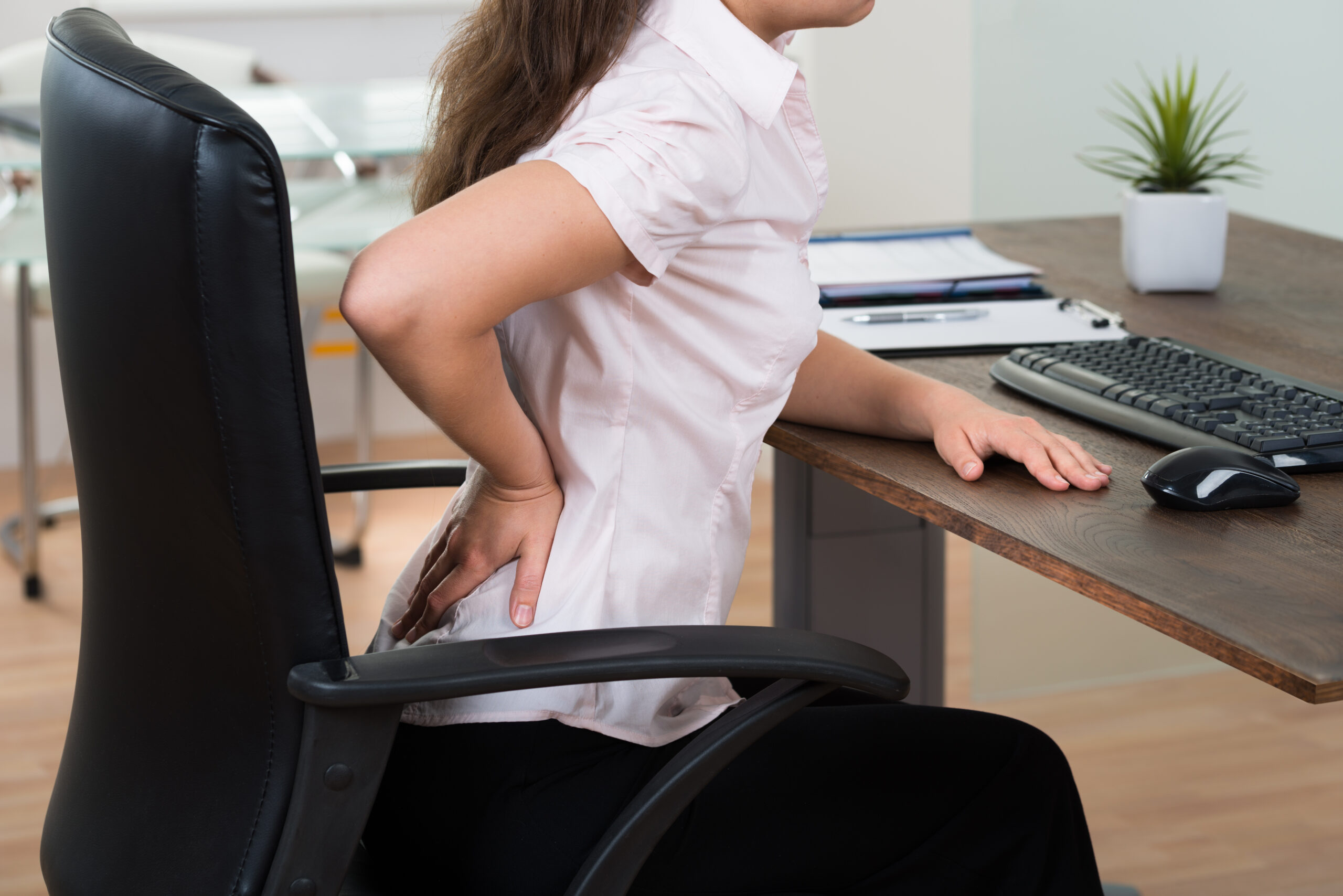
Ergonomic chairs for lower back pain
Lower back pain is one of the most common reasons people come to us. It usually develops gradually from sitting in a chair that doesn’t support the natural curve of the spine. Over time, this causes the lower back muscles to overwork, leading to stiffness and aching. In more serious cases, increased pressure on the lumbar discs.
The features that make the biggest difference for lower back pain are:
✔ Adjustable lumbar support that helps maintain the natural curve of your spine. A chair with height-adjustable or inflatable lumbar support lets you position the support exactly where your lower back needs it. Fixed lumbar pads are a compromise. Adjustable ones are always better.
✔ Seat slide (seat depth adjustment) that allows you to sit fully back in the chair while maintaining proper leg positioning. Getting the depth right distributes your weight evenly across your thighs and keeps the pelvis in the correct position. This directly reduces strain on the lower back.
✔ Tilt tension control that encourages movement and supports dynamic sitting throughout the day. A correctly set tilt allows gentle recline, which reduces static load on the lumbar discs and prevents the stiffness that builds up from sitting in one fixed position.
Ergonomic chairs for sciatica
Sciatica is caused by pressure or irritation on the sciatic nerve, which runs from the lower back through the hips and down each leg. Sitting with an incorrectly tilted pelvis or uneven weight distribution can aggravate it significantly.
A chair that helps with sciatica needs to do two things well: support the lower back in a neutral position and reduce pressure on the base of the spine and hips.
Adjustable lumbar support keeps the lumbar spine in its natural curve, reducing the compression that irritates the sciatic nerve.
Seat slide ensures your weight is distributed evenly across your thighs rather than concentrated at the base of the spine.
Tilt and recline has a slight recline of around 100 to 110 degrees, which opens the hip angle and reduces sciatic nerve compression. A chair with adjustable tilt lets you find and hold that position comfortably throughout the day.
Coccyx relief — some chairs in our range feature a contoured seat that reduces direct pressure on the tailbone and sitting bones. This can make a significant difference for sciatica sufferers.
If you have sciatica and aren’t sure which chair is right for you, our Chair Builder takes your condition into account and gives you a tailored recommendation.

Chairs for neck and shoulder tension
Neck and shoulder pain from desk work is usually caused by a chair that doesn’t support the upper back and head properly. When your chair fails to do this, your neck muscles compensate, and after hours of that, tension builds.
Headrest support provides support for the neck and reduces upper body tension. A height and angle-adjustable headrest allows your neck muscles to fully relax when you recline, particularly during calls or reading tasks. For people who already carry tension in the neck and shoulders, it makes a noticeable difference.
Upper back support — a backrest that follows the natural shape of the spine distributes support across the whole back rather than concentrating it at one point. This reduces the tendency to hunch the shoulders forward during long sessions.
Armrest height adjustment — arms that sit too low or too high pull the shoulders out of alignment. Properly adjusted armrests let the shoulders stay in a relaxed, neutral position throughout the day.
Finding the right ergonomic chair for your condition and budget
You don’t need to overspend to improve your posture, but you do need a chair that can be properly adjusted to your body. If you’ve bought chairs before and they haven’t helped, it’s usually because they weren’t designed for your body or your specific condition.
Choosing the right chair shouldn’t feel like guesswork, especially when you’re already dealing with ongoing discomfort. We focus on sensible pricing without compromising on quality, so you can invest in a chair that delivers long-term support rather than a short-term fix.
Our range is fully customisable, allowing you to tailor key features to your needs without additional cost, helping you get the right level of support from the start.
Browse our full range of chairs for back pain, chairs for sciatica and chairs for neck and shoulder pain. Or use the Chair Builder to get a recommendation based on your specific condition.
FAQs
What chair is best for sciatica?
A chair for sciatica should reduce pressure on the lower spine and hips while supporting proper posture. Look for adjustable lumbar support, seat depth adjustment and pressure-relieving seat designs. Our Chair Builder can help identify the most suitable option based on your symptoms.
Does lumbar support really help?
Yes, lumbar support helps maintain the natural curve of your spine and reduces strain on the lower back. Without it, you’re more likely to slouch, which can lead to discomfort and longer-term postural issues.
How should my chair be adjusted?
Set your seat height so your feet are flat on the floor and your knees are at roughly a 90-degree angle. Position the lumbar support in the curve of your lower back, and adjust your armrests so your shoulders remain relaxed. Small adjustments can significantly improve comfort over time.